As we tidy up our production folders ready for hand in, I look at our treatment from when we started this project, compared to our edits, it hasn't become the outcome we once wrote down in October. When you're making a film, I don't think that any treatment will match the film in the end, and I think that shows what I said in a few posts back about how 'life happens' and how things can change throughout the filming process.
The treatment is meant as an strong outline for our film and although our original intentions were interesting, exciting and had a lot of potential; we came together and made two totally different visions and it's for this reason I don't mind that the documentary went in a different direction completely. I'm glad we had the treatment as a structure of course, but I'm happy that we explored other areas and that the documentary turned out with surprising results.
Showing posts with label Class. Show all posts
Showing posts with label Class. Show all posts
Thursday, 23 January 2014

Thursday, 12 December 2013
"Stories We Tell"
In last Thursday's class, we watched another documentary. This documentary was by Sarah Polley, a Canadian actress and director; having starred in "Dawn of the Dead" and "Mr. Nobody" as well as also directing "Away from Her". This documentary was very eye opening, especially when it came to interview techniques because it was unlike any documentary I had seen before. I recently spoke about "The Conversation with Amanda De Cadanet" and not only about the topics she discusses but how she interviews. A link to that post can be found here (x).


"Stories We Tell" is about Sarah Polley's family, mainly concentrating on their mother and father's relationship. My favourite piece of information that I found out about this documentary is that Sarah doesn't call her interviewees, interviewees; she calls them "storytellers" and in all honesty, I had never thought about this until now, and it's absolutely true. If something happened and you ask five people what happened; you're more than likely going to get a alternative version of the situation, you will never get the one hundred percent truth to what happened because it always have a little differently depending on each person. So the same can be said for any type of family situations, including the ones Sarah's family talk about in the film. The same names are mentioned and certain situations are talked about but with a slight variation.
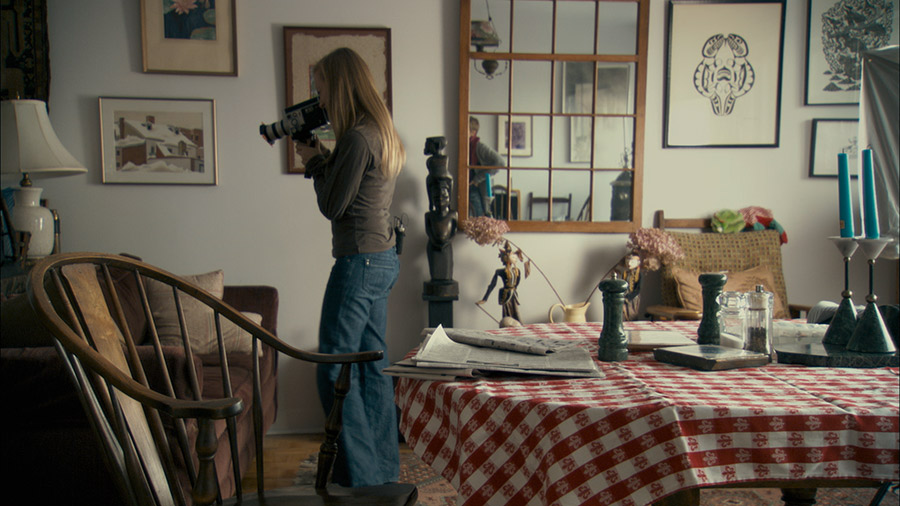
(A shot taken from the set of Sarah setting up for her interviews with her family)
As I mentioned earlier in the post, I was blown away by her interview techniques especially. The beginning of the film shows Sarah setting up her interviews, and this shows how nervous her family members are. Normally in anything, be it documentary or television show, we never normally see the beginning before the beginning of the interview. Sarah sits behind the camera and you can hear her ask the questions in the film, but most interview tend to take out their questions and have the questions be told in such a way that it is asked through the videos and photographs on screen. Although this use of question asking is quite visual, it's always refreshing to hear the question from the director or interviewer themselves. What I found extraordinary, was when her family sat down, Sarah asked them to essentially tell their full life story and they were surprised that they would have to tell the entire story, but they didn't seem to know this before the interview.
We see boom mics, the setting up of the camera, the storytellers are sitting down and everything they said from the moment they sit down, is all recorded. As well as the interviews, some of the home footage shots are actually dramatized and grains are added to give the impression that these shots are old footage. An example of this is shown below, and it is very well done, because until I researched this film further, I didn't pick up on the dramatization at all. The footage of Michael (Sarah's non-biological father) being told that he isn't her biological father, you can tell that it has been dramatized, but the older looking footage is harder to recognize.
(One of the dramatized shots made to look like home footage)
I was also fascinated by some of the interview environments and the shots used throughout the film. With the interviews, the home environment was used for the majority of them along with shots of her father recording their story in the recording studio, as Sarah sits on the other side of the booth listening in and adjusting his levels. The recording that her father does is used throughout the film to put over footage or photographs, when the interviews with her family aren't being shown.
Tuesday, 3 December 2013
We're ripping out a few rows and knitting them again.
If I sat and here and told you that I wasn't worried about an early meeting with our tutor, I would be lying. I had a feeling that we had done something wrong, or something just wasn't right. My partner and I were unable to go to the meeting together so we went individually instead.
After talking through with our tutor, we have decided to do a re-shoot of both knitting groups. When I first realized that this may be the case (the day before the meeting), I have to admit, my confidence took a good kicking. At this point, I didn't know what was going on but I knew something was wrong, and everything I had done up until that point (with the documentary production), I had zero confidence in it at this point. A part of that is obviously something that is in my head where everything has to be perfect, and of course, nothing is ever perfect but that's something I have been working on the past few years.
Our tutor and I looked through the footage together (which I hadn't been able to watch yet due to other projects production work taking over) and everything she explained she didn't think worked, she was completely right. For example, the second group we went to at night; we tried to do a wide shot of the entire group, and because there was so many people in the group, the shot simply didn't work because of numbers. Another problem we had was we tried to shot it handheld instead of using our tripod (which we had on both trips). On the camera when looking back over a good majority of the shots, the footage looked great, but when we looked at it on the Macs, you could see the shakiness of the camera and it didn't look like it would blend together as well as we had hoped. We also have a number of focusing and framing issues; we needed to capture more of the knitting and then capture who the person was that was knitting the project. The biggest problem we had was the time of each clips; the shortest one was nine seconds so for our next shoot, we are aiming for a minimum of thirty seconds for each clips and even try for two minute shots at a time.
During and after the meeting, I didn't feel as bad about having to do a re shoot. I still blame myself to a certain degree but this happening, it will help us in the end make a better documentary, which is our goal of course. This is a huge learning curve for us both, and this experience will help us in the future no matter what type of film or television work we do.
"Searching for Sugar Man"
I can honestly say that this documentary is one of the most fascinating stories I've ever watched, even heard. "Searching for Sugar Man" is a documentary about Sixto Rodriguez who was an American musician in the 1970's who's music took off greatly in South Africa but never in his native America. Rumours for years had gone around about him killing himself and this story follows the journey of two of his biggest fans to find out the truth about his death, or if there even was a death. To them, it was like he just disappeared off the face of the earth and they wanted to know more about this mysterious musician.

I'll not spoil the film for anyone who hasn't seen it yet, but it's a must see in my eyes. Not only story wise of course, but shot wise too. The beginning of the films starts out with a high wide shot of the city, these shots are my absolutely favourite camera shots; the buildings with all the lights lit up as well as the car lights; at night especially it's a beautiful view. When we move to Cape Town, it's very carefully played with the camera driving along with the car and it slowly pulls into a wide shot to see the car driving away in the distance but you can see how tall the cliffs and hills truly are. It's an amazing shot and I can only imagine how much time and patience went into getting that exact shot.


I'll not spoil the film for anyone who hasn't seen it yet, but it's a must see in my eyes. Not only story wise of course, but shot wise too. The beginning of the films starts out with a high wide shot of the city, these shots are my absolutely favourite camera shots; the buildings with all the lights lit up as well as the car lights; at night especially it's a beautiful view. When we move to Cape Town, it's very carefully played with the camera driving along with the car and it slowly pulls into a wide shot to see the car driving away in the distance but you can see how tall the cliffs and hills truly are. It's an amazing shot and I can only imagine how much time and patience went into getting that exact shot.
Towards the beginning of the film, there was an animated drawing of "The Sewer" and over a few seconds, this turned into a photograph which then changed to real camera shots. It was a stunning panning shot, almost two minutes worth, and again, I can only imagine how long that took to set up and direct.
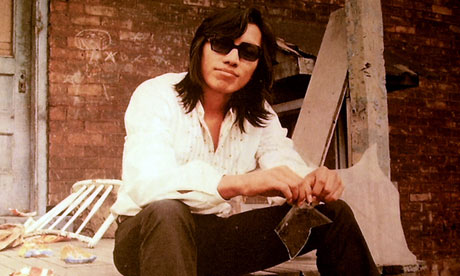
Other shots throughout the documentary included black and white photographs made into slow motion camera movement montages that all blended together so well that you wouldn't even realize you were watching a group of photographs; you felt as though you were watching a mini story unfold. When interviews were taking place, the background to these were very interesting; for example the interviews with Clarence takes place in a recording studio and a number of gold discs are behind him on the wall.
Sixto's music is played throughout the film and they added an extra touch to make it easier to find his music online. Every time a different song played, the title of the track and the year it was made, was put on the left hand side on the screen.
If you're looking for a documentary with catchy music throughout, a story that will keep you compelled from start to finish as well as visually beautiful cinematography, then this is one of those films that you need to see.
Friday, 29 November 2013
Production Photographs!
I believe our shoot day was a success! We had both our schedules planned out, and all our release forms ready to give out to everyone at both groups.
I was the camera operator for the group I had organized while Jamie was done the sound. We then swapped roles when we got to his group later on that night.
Both groups were lovely to work with and were very accommodating to us filming around them. They let us listen in on their conversations, record them having a chat as well as knitting their own projects; and were very welcoming to Jamie and I.
Here is just a few of the production photographs we took on the night:


(Some knitted items at the evening group in the Church)

I was the camera operator for the group I had organized while Jamie was done the sound. We then swapped roles when we got to his group later on that night.
Both groups were lovely to work with and were very accommodating to us filming around them. They let us listen in on their conversations, record them having a chat as well as knitting their own projects; and were very welcoming to Jamie and I.
Here is just a few of the production photographs we took on the night:

(A few of the ladies in the afternoon group in the library)

(Some knitted items at the evening group in the Church)

(Extreme close up of one of the already knitted items at the evening group)
Tuesday, 19 November 2013
Confirming and Booking.
I went today and booked us a digital SLR camera from the Media Department in college because we have confirmed that we will be going to the Wednesday afternoon group in Dundonald and the Wednesday night group in East Belfast. I will be collecting the camera on Tuesday afternoon after another meeting then bringing it back on Thursday afternoon just before documentary class. We're also hoping to visit a wool shop to take some shots, but this is still to be confirmed. If we were to do this; it would be done on the Thursday morning.
Wednesday, 13 November 2013
Researching older documentaries.
We watched a handful of older documentaries in class to try and get a feel of how our own documentaries may turn out because we have to use the same method of storytelling (No voice over and no interviews).
Terminus (1961)
No voice over or narrator; a couple of the scenes were clearly staged (Later research confirmed our predictions), the songs played throughout were made specifically for the documentary, voices weren't always synced up with people's mouths, graph cuts were used to edit shots together, no interview took place and there was overlayed sound.
Launch
No interviews, no dialogue, no voice over or narrator, impressionist and outside sound was used.
Drifters (1929)
Completely silent film wth no sound, music, voice over or dialogue.
Terminus (1961)
No voice over or narrator; a couple of the scenes were clearly staged (Later research confirmed our predictions), the songs played throughout were made specifically for the documentary, voices weren't always synced up with people's mouths, graph cuts were used to edit shots together, no interview took place and there was overlayed sound.
Launch
No interviews, no dialogue, no voice over or narrator, impressionist and outside sound was used.
Drifters (1929)
Completely silent film wth no sound, music, voice over or dialogue.
Subscribe to:
Posts (Atom)