Showing posts with label Family. Show all posts

Thursday, 23 January 2014

Reflective Essay on my Experience.

As I reflect over my documentary experience, I have had both ups and downs. Now naturally, this happens in every single production because nothing will ever run smoothly, that’s not how life works.

I feel like my partner and I didn’t connect as much as I had hoped. While this has its disadvantages, it also had its advantages. We were able to create two completely different edits; Jamie’s focused more on a montage piece of the knitting group whereas mine dove into a more personal element with my Mother along with the knitting group as well. I personally prefer working alone on the editing side of film making and with us both having two very different views on how we wanted our projects to turn out, I think the editing process was a lot easier working separately.

The disadvantages outweigh the advantages however; pre-production meetings were few and far between (despite them being regularly organized for certain days and times) and a large majority of our communication was done over Facebook. In my past experience, using Facebook as a primary source to communicate with a group hasn’t always worked out well, so I wasn’t a huge fan of using it this time around. I feel my partner and I had very different ideas from the start and it took us a few weeks longer than other groups to actually choose our subject. Both having different ideas isn’t necessarily a bad thing but when one has to compromise for the other, I feel like the other person will always have more of a passion for the subject than the other. Even when we first started speaking about knitting, it was clear that we both had different visions for what we wanted our documentary to be and because we are both inspiring editors, we both wanted to edit as well. I’m very glad that we had the opportunity to do our own edits because I didn’t want my favourite stage of the process to be dampened with questioning and debating each shot with each other.

Going into the knitting groups, I was very nervous about walking into a part of these people’s lives and having a camera sitting in front of their faces. I was worried that they wouldn’t want us to film, or we were getting too close to them or that they would be very uncomfortable in our presence, which is something I definitely didn’t want to happen. I know being a part of a documentary is that you stage reality to a certain degree but before the subject was knitting, I didn’t want to walk in and have to ask some-one to knit that again or distract them, causing them to make a mistake. We didn’t have to stage any shots in the knitting group and maybe we should have done it for one or two shots, just to have something extra but I honestly don’t think we needed it, which made me very happy.  

For me, my disappointment happened when we came to the realization that we would have to re-shoot the knitting groups again. At the time, I thought I had done something wrong but I came to learn that there aren’t many film shoots that don’t have re-shoots so that made me feel a little better. As we finished our re-shoot and looked over the footage, I was shocked at how much better the re-shoot footage was compared to the first. Our main mistake was not using a tripod and we should have used one from the start; we didn’t think we would need one because we wanted to do a lot of moving and close up shots, and using a tripod, this is a lot tougher. So the second time around, even though I wasn’t able to get as close as I wanted to the wool, especially at the knitting group, the footage came out clearer and more smoother, so I didn’t mind compromising on moving shots so much.

I have played a small part in documentary film making before but it was very unstructured and I didn’t like the end result. This was a lot more structured than my previous work but I feel like for this documentary, it could have been more structured than it was. I would have liked to work as a team more but I fear that our edit and both our visions would have been compromised if we had to do one single edit because of the different ways we wanted to go. I’m very happy with my edit and how it turned out; I gave colour correction my best shot when it came to the interview stage but that was a small problem with the lighting in the room so I don’t feel it takes away from the documentary. My music is quite quirky and could be called cheesy at times but that was the style I was going for because of the subject matters, and I think it fits the shots, the vibe and the story well.

Overall, I enjoyed the majority of the documentary experience and I would say the only large negative I have is the lack of communication at times. I find it very stressful when I don’t know where projects are headed, and meetings help me get through that struggle.

I don’t feel like my documentary is just your average short documentary; I believe it has character, as well as being insightful and entertaining about a hobby that everyone has heard of but doesn’t know much about. 

Knit One Film One.

My documentary is finished! After reflecting on my documentary experience (in my next post), here is a link to "Knit One Film One". Enjoy!


Sunday, 15 December 2013

Magazine Letters.

Knitting isn't only in social groups; it has always had a huge following in magazine and is now taking off from the internet too. "Knit Today" is one of the knitting magazines that my Mum gets sometimes and when she finished the Christmas jumper that she knit me (It's in this post), she wrote a small post into this magazine and this month she was featured in the magazine!


Even though magazines like this have been around a lot longer than the internet, I think it's something that it can be connected to the social groups we have been focusing on more. The people reading the magazine aren't all in the same room together, but they are all reading the exact same thing all over the world and that in itself, is a very big community. 

This magazine and many others have their own community forums online so everyone reading the magazine can go online and talk to others about the projects featured, what they liked, what they didn't like or what they would like to see in the future. 

Thursday, 12 December 2013

"Stories We Tell"

In last Thursday's class, we watched another documentary. This documentary was by Sarah Polley, a Canadian actress and director; having starred in "Dawn of the Dead" and "Mr. Nobody" as well as also directing "Away from Her". This documentary was very eye opening, especially when it came to interview techniques because it was unlike any documentary I had seen before. I recently spoke about "The Conversation with Amanda De Cadanet" and not only about the topics she discusses but how she interviews. A link to that post can be found here (x).


"Stories We Tell" is about Sarah Polley's family, mainly concentrating on their mother and father's relationship. My favourite piece of information that I found out about this documentary is that Sarah doesn't call her interviewees, interviewees; she calls them "storytellers" and in all honesty, I had never thought about this until now, and it's absolutely true. If something happened and you ask five people what happened; you're more than likely going to get a alternative version of the situation, you will never get the one hundred percent truth to what happened because it always have a little differently depending on each person. So the same can be said for any type of family situations, including the ones Sarah's family talk about in the film. The same names are mentioned and certain situations are talked about but with a slight variation. 

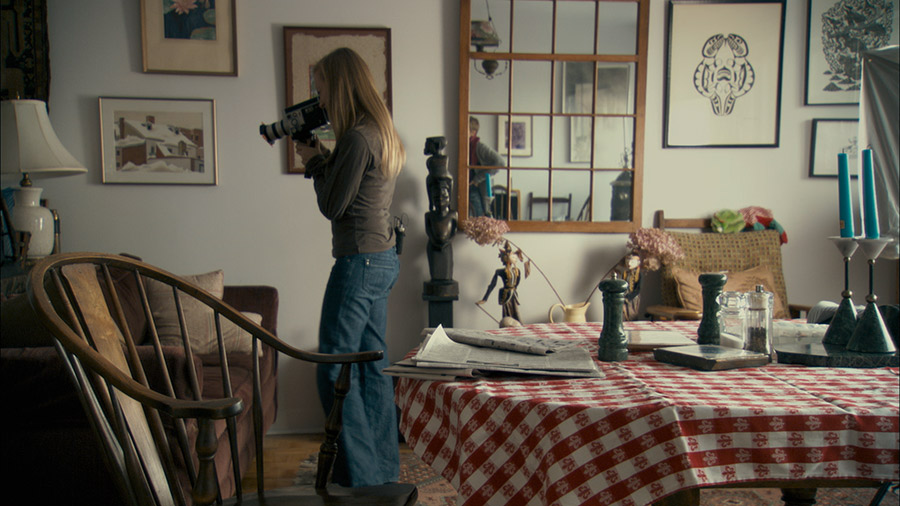
(A shot taken from the set of Sarah setting up for her interviews with her family)

As I mentioned earlier in the post, I was blown away by her interview techniques especially. The beginning of the film shows Sarah setting up her interviews, and this shows how nervous her family members are. Normally in anything, be it documentary or television show, we never normally see the beginning before the beginning of the interview. Sarah sits behind the camera and you can hear her ask the questions in the film, but most interview tend to take out their questions and have the questions be told in such a way that it is asked through the videos and photographs on screen. Although this use of question asking is quite visual, it's always refreshing to hear the question from the director or interviewer themselves. What I found extraordinary, was when her family sat down, Sarah asked them to essentially tell their full life story and they were surprised that they would have to tell the entire story, but they didn't seem to know this before the interview. 

We see boom mics, the setting up of the camera, the storytellers are sitting down and everything they said from the moment they sit down, is all recorded. As well as the interviews, some of the home footage shots are actually dramatized and grains are added to give the impression that these shots are old footage. An example of this is shown below, and it is very well done, because until I researched this film further, I didn't pick up on the dramatization at all. The footage of Michael (Sarah's non-biological father) being told that he isn't her biological father, you can tell that it has been dramatized, but the older looking footage is harder to recognize. 

(One of the dramatized shots made to look like home footage)

I was also fascinated by some of the interview environments and the shots used throughout the film. With the interviews, the home environment was used for the majority of them along with shots of her father recording their story in the recording studio, as Sarah sits on the other side of the booth listening in and adjusting his levels. The recording that her father does is used throughout the film to put over footage or photographs, when the interviews with her family aren't being shown. 

Wednesday, 13 November 2013

Nailing down our subject matter.

After a number of weeks of trying to decide what subject matter to choose for our documentary, we choose to go with my idea of knitting. My partner and I were both able to relate to knitting because members of both our families knit and they are in some community knitting groups held in and around East Belfast during the week. This made the suggestion of going to local knitting group easier because we knew people who were involved in these groups, and I had been to one of the groups before a handful of times, so a majority of people who attended, already know who I am.